Facility safety
Safety starts with the facility.
Inspections, procedures and people’s readiness — in one plan.
Fire safety rests on a working, properly maintained building and timely inspections. Further layers are fire-protection equipment and documentation, clear procedures and people prepared to act. None of these layers replaces the others.
Building → procedures and equipment → people
- 01
Building
Technical condition and maintenance
- 02
Procedures and equipment
Fire protection
- 03
People
Readiness and practised response
The diagram shows a relationship, not a single service package. Inspections, fire protection and training have separate scopes that should be coordinated for each facility.
A sound facility is the starting point.
The technical condition and maintenance of the building and its systems affect safe use. Timely inspections help identify problems, but completing an inspection does not replace correcting defects and ongoing maintenance.
Inspection records, recommendations and responsibility for follow-up should be kept in order. The appropriate scope and dates must be confirmed for the facility — no universal schedule is given here.
Inspections and dates · Bezpieczny BudynekEquipment and procedures must work together.
Fire-protection systems and equipment, their maintenance and documentation should match the facility’s conditions. Procedures connect these elements with how work is organised: raising the alarm, assigning roles, evacuating and communicating during an emergency.
Documentation should reflect the actual facility and how it is used. Changes to layout, equipment or work organisation should be discussed with the person responsible for fire protection. Safety Group’s services page presents fire-protection support, analyses, assessments and audits; the specific scope needs to be agreed.
Fire protection · Safety Group servicesPeople’s readiness takes practice.
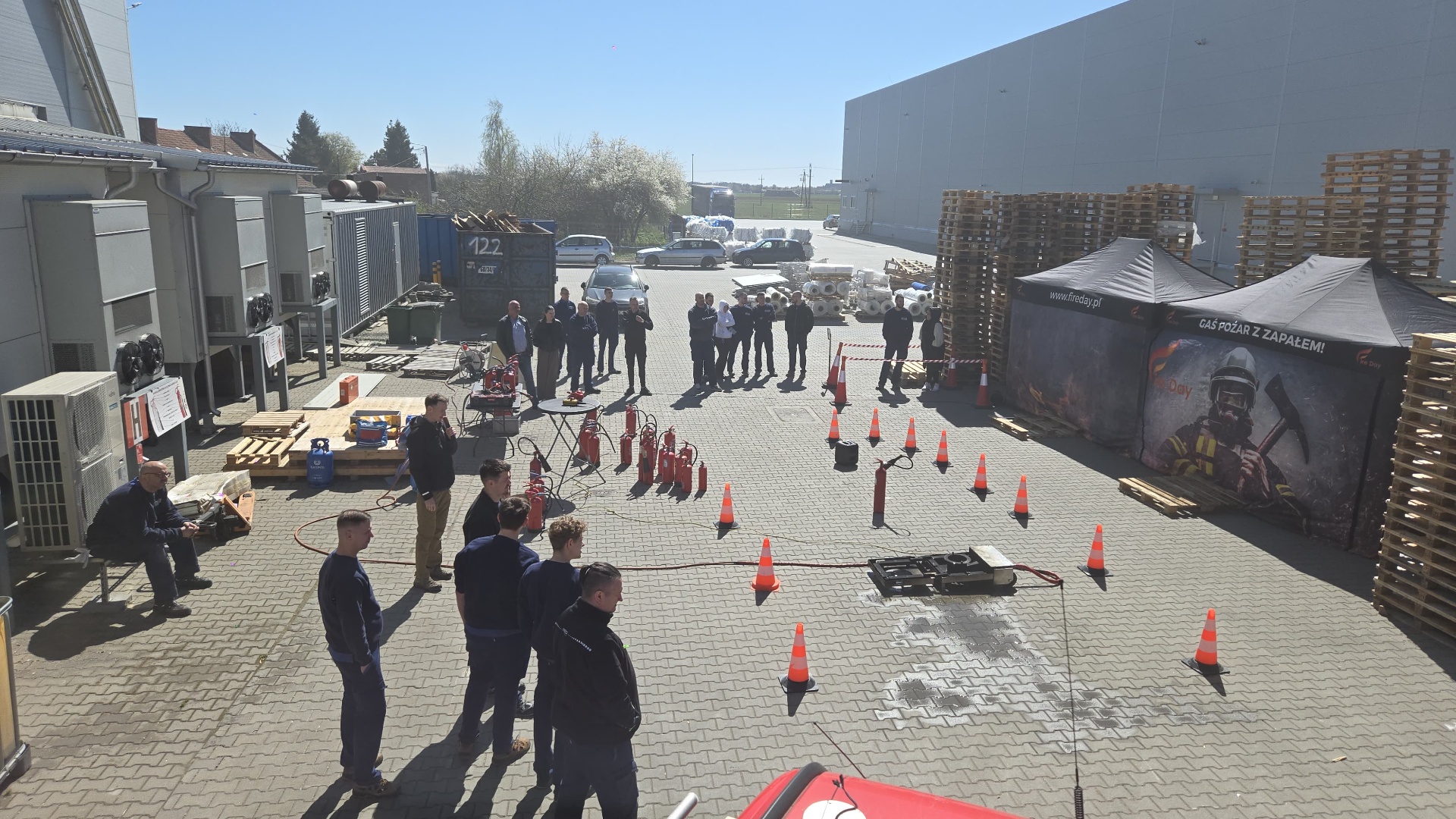
Knowing the instructions is not the same as practising a response. Fire Day helps teams prepare for fire and evacuation and, within the agreed scope, first aid. Training takes place at the client’s facility, under conditions agreed with the organiser and with instructor supervision.
Exercises let participants practise raising the alarm, team roles, evacuation and equipment use in controlled conditions. First aid and practical firefighting exercises are part of Premium; details are matched to the selected training. We do not promise that training eliminates risk or ensures a flawless response.
Fire Day complements facility inspections and procedures. It does not replace technical inspections, equipment servicing or fire-protection documentation.
What should you know before training?
Does Fire Day replace building inspections?
No. Fire Day prepares people to respond and practise taking action. It does not assess the building’s technical condition or replace inspections, equipment maintenance or required documentation.
How should inspection scope and dates be established?
Scope and dates need to be established for the specific facility, its systems, use and relevant documentation, with an appropriately qualified specialist. This page is not a compliance calendar or legal advice. For inspections, visit bezpieczny-budynek.pl.
Are documentation and working equipment enough?
These are important foundations, but people also need to know how to raise the alarm, their role and how to evacuate. Exercises help connect procedures with practice and identify areas to discuss or practise again. They do not guarantee a flawless response in every incident.
What does Fire Day training at the client’s facility include?
The scope is agreed before training. Standard covers fire-safety foundations and a trial evacuation; Premium adds, among other activities, extinguisher and fire blanket practice and practical first aid. The programme, exercise area and organisational arrangements are confirmed individually.
Where should planning start?
First gather information about the facility, inspections, equipment and current procedures. With the people responsible for these areas, identify matters that need attention. Then establish who should practise, their roles and the appropriate training scope. These areas need coordination; they are not a rigid sequence of services.